Monday, May 22, 2017

Blog 7

Graphane could act as efficient and water-free hydrogen fuel cell membrane


Researchers at the University of Pittsburgh's Swanson School of Engineering have found that the unusual properties of graphane -- a two-dimensional polymer of carbon and hydrogen -- could form a type of anhydrous "bucket brigade" that transports protons without the need for water, potentially leading to the development of more efficient hydrogen fuel cells for vehicles and other energy systems.
The principal investigator is Karl Johnson, the William Kepler Whiteford Professor in the Swanson School's Department of Chemical & Petroleum Engineering, and graduate research assistant Abhishek Bagusetty is the lead author. Their work, "Facile Anhydrous Proton Transport on Hydroxyl Functionalized Graphane" (DOI: 10.1103/PhysRevLett.118.186101), was published this week in Physical Review Letters. Computational modeling techniques coupled with the high performance computational infrastructure at the University's Center for Research Computing enabled them to design this potentially groundbreaking material.
Hydrogen fuels cells are like a battery that can be recharged with hydrogen and oxygen. The hydrogen enters one side of the fuel cell, where it is broken down into protons (hydrogen ions) and electrons, while oxygen enters the other side and is ultimately chemically combined with the protons and electrons to produce water, releasing a great deal of energy.
At the heart of the fuel cell is a proton exchange membrane (PEM). These membranes mostly rely on water to aid in the conduction of protons across the membranes. Everything works well unless the temperature gets too high or the humidity drops, which depletes the membrane of water and stops the protons from migrating across the membrane. Dr. Johnson explains that for this reason, there is keen interest in developing new membrane materials that can operate at very low water levels-or even in the complete absence of water (anhydrously).
"PEMs in today's hydrogen fuel cells are made of a polymer called Nafion, which only conducts protons when it has the right amount of water on it," says Dr. Johnson. "Too little water, the membrane dries out and protons stop moving. Too much and the membrane "floods" and stops operating, similar to how you could flood a carbureted engine with too much gasoline," he added.
Dr. Johnson and his team focused on graphane because when functionalized with hydroxyl groups it creates a more stable, insulating membrane to conduct protons. "Our computational modeling showed that because of graphane's unique structure, it is well suited to rapidly conduct protons across the membrane and electrons across the circuit under anhydrous conditions," Dr. Johnson said. "This would enable hydrogen fuel cell cars to be a more practical alternative vehicle."

$20 billion deal


Clariant and Huntsman to join in $20 billion deal

Swiss specialty chemical company Clariant will combine with U.S. chemical maker Huntsman Corp. in a merger of equals valued at about $20 billion. By joining, the companies hope to better compete in high-growth markets, expand profit margins, and cut operating costs. The new company will be called HuntsmanClariant and will combine Huntsman’s advanced materials, performance products, polyurethanes, and textile effects businesses with Clariant’s catalysts, personal care, oil and gas, and plastics and coatings businesses. The two firms expect the deal to close by the end of the year. With annual sales of about $14 billion, HuntsmanClariant will vie with Covestro to be the world’s second-largest specialty chemical maker after Evonik Industries. In recent years both Clariant and Huntsman have sought to sell off lower-value businesses. In 2012, Clariant divested its textile and paper chemicals business, and it has recently worked to spin off its plastics and coatings businesses. The latter will stay in the new firm’s portfolio for now. Huntsman will complete the planned separation of its pigments and additives business, to be called Venator Materials, this summer. In March, Huntsman said it was evaluating other options, including a merger, to increase shareholder value. Once the deal closes, Huntsman shareholders will own 48% of the new company based on the difference in the values of the two firm’s shares. Peter R. Huntsman, Huntsman’s CEO, will serve as CEO of HuntsmanClariant, and Clariant CEO Hariolf Kottmann will be chair of the board. Clariant’s home base in Pratteln, Switzerland, will be the new firm’s headquarters, and operations will be in The Woodlands, Texas, where Huntsman is based. The firms say HuntsmanClariant will be more profitable than either stand-alone company, in part because of a projected $400 million in annual cost savings. Its combined profit margin of 17.2% will outpace Clariant’s 15.2% and Huntsman’s 13.4%, they say. HuntsmanClariant’s largest end market will be consumer specialties, including chemicals used in personal care, packaging, and textiles. The executives also stress complementary businesses aimed at automotive manufacturing. “Clariant and Huntsman are joining forces to gain much broader global reach, create more sustained innovation power, and achieve new growth opportunities,” Kottmann says. Peter Huntsman adds, “Together, we will create a global leader in specialty chemicals with a combined balance sheet providing substantial financial strength and flexibility.” The merger is subject to approval by shareholders and regulators. Shareholder reaction to the news was mixed. Clariant shares closed up 3.5% on May 22, the day the deal was announced; Huntsman shares were down slightly in midday May 22 trading.

Blog 7

New best super computer in the world !

Taihu Shenwei light "is according to the national Ministry of science and technology development plan of 863, with nearly 3 years development cycle. As we all know, the last TOP500's first "Tianhe two" was built using the Intel processor in the United states. Because the United States in super CPU of China embargo, and China has always advocated the independent research and development, so they Taihu light "is the first super computer processor used in all domestic construction. Although Chinese due to independent CPU started late, but in the process of backward technology under the condition of complete performance refresh and reduced power consumption two breakthrough, therefore, can be said that the United States embargo forced chip China independent research and development process and speed. 


"Taihu Shenwei light" super computer cabinet consists of 40 operational and 8 network cabinet, each operation cabinet comprises 4 blocks consisting of 32 pieces of operation plug-in super nodes, each of which consists of 4 operational node plug-in board. But as Shen Wei SW1600C processor before aspirations list the title of "Taihu Shenwei light" obviously can not be used, so the node in each operation is equipped with 2 pieces of Shen Wei of SW26010 high performance processor, so a cabinet has 1024 processor, a "power Taihu light" a total of 40960 processor.

Shen Wei SW26010 is China's own intellectual property rights processor, developed by the Jiangnan Computing Institute, using Alpha 64 bit RSIC architecture and 65nm manufacturing process, out-of-order execution. Shen Wei SW26010 consists of 4 MPE (Management Processing Element) management unit, 4 CPE (Computing Processing Element) calculation unit and 4 MC memory controller unit, the CPE unit is composed of 64 core 8x8 array composed of a total of 260 core.

Performance, "peak performance 125.436PFlops Taihu Shenwei light" super computer system, continuous performance 93.015PFlops, performance and power consumption ratio has reached 6051MFlops/ W, the three parameters are the first in the world, and than the runner up "Tianhe No. two" nearly two times faster, but also improve the efficiency of 3 times. What's the concept? People have done statistics, "Taihu Shenwei light" performance and production in 2016 about 2000000 PC and 1 minutes flat, computing power is equivalent to 7 billion 200 million people worldwide with 32 years of uninterrupted computing calculator.


 It is understood that in the global top 500 supercomputers on the list of the top ten in addition to the "Shenwei Taihu light", and "China Tianhe No. two", the "Titan" and "Sequoia", Japan's "Beijing", American "Mira" and "31", "Switzerland gornt peak", German "Bonasa bonasia" and "II Shaheen of Saudi arabia". But in speed, "3 times Taihu Shenwei light" to "Tianhe No. two", 5 times the United States "Titan", the sum of more than 4 supercomputer computing speed ranked second to fifth.

It is not the first time that china's super cpmputer become the best in the world. It shows that on the supercomputers, China has made unprecedented progress in speed and breadth. 
Brenden Cavaco
Engineering .1 Period A
5/17/2017

Blog #7

http://news.mit.edu/2017/using-light-propel-water-0425

After reading through the MIT news, I have previously learned about a new discovery that will help expand engineering. MIT has learned that they can use light sources to move and propel water.
Using light to propel water will be good for field systems that can separate oil from water at a drilling rig.

Finding out they could propel water through light sources by wettability. By causing individual droplets of water to coalesce and spread across the surface allowed them the best way to separate water and oil. Propelling water from oil will help fracking be more effective and stop contaminating household water. After observing the water mixed with the oil they noticed that the thicker the droplet, the harder it is it to separate the two. Since it is difficult to separate thick droplets, scientists decided to go down the route of photoresponsive surfaces.

Scientists studied titania which is found in sunscreen. Titania has a 5% of sunlight in the ultraviolet range. By creating a higher ultraviolet range, scientist used multiple polymer bound titania particles mixed with organic dye on glass. When activating sunlight onto the titania, the water and dye began to disperse from one another. Researchers learned that they could directly separate the oil from the water by causing individual droplets of water to coalesce and spread across the surface. The more the water droplets fuse together, the more they separate from the oil.

MIT associate professor of mechanical engineering Kripa Varansi said, "This creates an electric potential difference to be established between the surface and the liquid upon illumination, and leads to a change in the wetting properties.”

If we look back on the BP oil spill, the salt water and oil did not mixture together. Due to the saline water and sunlight directed on the mess, the oil did not disperse below the surface. Due to the ultraviolet range in the ocean helped disperse one another propel water away from the oil.

Researchers also learned that they can create a boundary that is not physically made. They can use a moving beam of light that allows you to direct water in any way.

The discovery of directing water based on ultraviolet range and light sources is very useful in the engineering field. Researchers will now be able to provide more discoveries and facts to real world jobs. This will help people prevent problems that works with oil and water, such as HVAC, engineers etc. In conclusion, the discovery of wettability is very important for the future of STEM.


Below is a link to a video that helps the explanation of Wettability.
https://www.youtube.com/watch?v=2LfTrgmleAY


New Robotic Fish for Environmental Monitoring

Michael Sullivan 
Period A. 

Universidad Politécnica de Madrid. "New robotic fish for environmental monitoring." ScienceDaily. ScienceDaily, 10 May 2017. 

Many fish in our oceans are becoming endangered or even extinct without any good way to monitor or save them. Researchers from Universidad Politécnica de Madrid and University of Florence are developing a bio-inspired robot equipped with special chemical sensors able to detect the pH of water. These sensors will monitor the water quality where the fish are living. These robots mimic a swimming fish in order to minimize the stress of the fish around it. This robot is bio-mimetic, that is, that mimics both its appearance and its functioning. In addition to providing water data, the robotic fish is also able to modify the way they swim according to the water conditions with the purpose of, for example, to detect and highlight the areas of concentration.

Prototype of the robotic fish

Aquaculture has become the fastest growing animal food sector in the world. Today, the production of fish, crustaceans and shellfish supplies around fifty percentages of all fish that is consumed by humans globally. In order to keep aquaculture systems at an optimal level and to avoid physiological stress and disease of fish, water quality and adequate nutrition must be monitored and controlled.

The length of the fish is 30 cm without including the tail. The prototype adopts shape memory alloys actuators that bend a continuous flexible structure made of polycarbonate of 1 mm thickness. An additional structure of ribs was employed to support the latex-based skin. 

According to Claudio Rossi, a developer of this bio-inspired fish, "thanks to this system that provides early information on environmental change, we can control the parameters of water quality and improve management decisions of fish farms, and consequently, the wellness of these animals."

Blog #6 3D Printing is Crazy

Our class has some experience with 3D printing. We've worked with modeling, digital measurements, and designing something to be useful. Experienced 3D printers, or talented digital designers are able to create crazy artwork or even simple gadgets with hinges built in. Now 3D printing is being looked at as a way to help make breakthroughs in technology, rather than being a breakthrough technology itself.
Engineers at UC San Diego utilized a high end printer, which is able to combine rubber materials with the traditional rigid plastic of 3D printing. This allowed the team of engineers to make a "cage" of plastic to contain the brains of the robot, then directly connect the legs, which are made of a hollow rubber and controlled with air. Below is a photo of one of the robots, where the legs and cage can be seen.
Each leg is compromised of three hollow chambers. Each chamber can be inflated or deflated individually. This is what gives the robot the ability to walk, rather than just slide along a surface. A solid leg can't articulate in the same way that the chambered design can.
This new design allows the robot to walk over surfaces that aren't easily navigable by other robots. Another benefit to the 3D printed design is highly reduced costs. Traditionally, molds would have to have been made for each iteration and small design change to the robot. With the printer, each iteration only requires a change in a computer file rather than a new mold. This showcases the practicality of 3D for scientific uses. 

Sunday, May 21, 2017

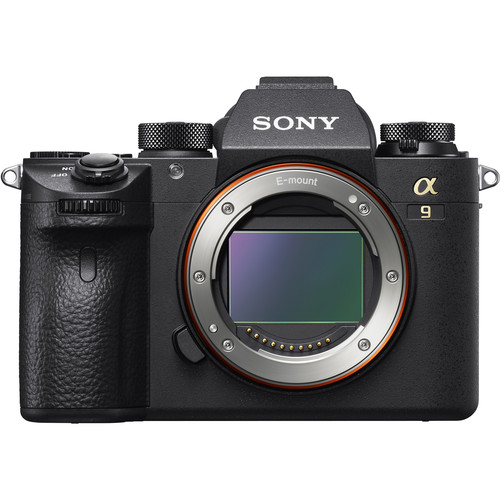
Fowler Blog #6 - Why The Sony Alpha series is actually very important.

        The Sony Alpha a9 was released this week. This is the next iteration of Sony's Alpha series. The Alpha series has been shaking up the camera industry.                                 
Sony Alpha a9 Mirrorless Digital Camera (Body Only)To a professional photogropher, a mirroless camera from 10 years ago would be a joke. It wasnt untill about two years ago when Sony released the best mirrless camera of its time, the Alpha a7, that the camera industry put down their dslrs and read into mirroless. They later toped their own achievemnet with the a7s, their video oriented mirroless camera and the a7r, their photo oriented mirroless camera while the a7 served as the middle ground. Following the a7 series came the updated line, a7II, a7r II and a7s II. Again another achievement. At this point mirroless cameras atarted to get the attention of professional photogrophers. 
Why is this important you may ask. Well as a clear leader in the indusry Sony is not only rapidly pushing to the future but they are also killing off any reminders we have of old SLR and poloroid cameras. The most common camera type right now is a DSLR or digital SLR camera. Its main function is using a mechanial mirror to send a preview to the view-finder, a feature first used on polorid cameras that has lived to this day in DSLR's.


The a9 is the first camera to feature a fully electronic shutter, built in wifi, built in bluetooth, and a onboard lan port, four features that are going to change the camera industry forever. This is becuase camera are finally becomeing more compter than camera. Cellphones becames computers 8 years ago. Game consoles became computers 4 years ago. Televison's and Cars are in the process of becomeing computers and now camera's are becoming full blown computers. In a few years we are bound to see cameras who have enough processing power to take a full sized raw photo, quickly tone correct it, convert it to a full sized hd png, and send it to your phone in seconds while also sending the raw file to your computer over the internet so you can sitdown and edit your photos. 

While this may not be new futuristic tech out right now, it is clearly a big step that is going to catch the eye of the industry and start a golden age for camera technology.