Sunday, May 28, 2017

VR and Mental Health


A growing body of evidence suggests that virtual reality (VR) technology can be an effective part of treatment for phobias, posttraumatic stress disorder, and other mental health conditions, according to a research review in the May/June issue of the Harvard Review of Psychiatry.


"Virtual reality is potentially a powerful tool for the psychiatric community," says author Jessica L. Maples-Keller, PhD, of University of Georgia. "It allows providers to create computer-generated environments in a controlled setting, which can be used to create a sense of presence and immersion in the feared environment for individuals suffering from anxiety disorders." The review appears as part of a special theme issue of Harvard Review of Psychiatry, focusing on Emerging Technology and Telehealth in Psychiatric Care. Dr. Maples-Keller and colleagues review the current state of research on VR technology for psychiatric treatment. So far, research in this area has focused on exposure-based treatment for certain types of anxiety disorders. Studies have evaluated VR applications for progressive exposure to frightening situations in patients with specific phobias -- especially fear of flying. Other studies have evaluated the use of VR for treatment of post-traumatic stress disorder in combat veterans.
Virtual reality applications can simulate exposures that would be costly or impractical to re-create in real life, such as airplane flight or combat conditions. It also enables the therapist to control the "dose" and specific aspects of the exposure environment. For example, the patient can "virtually" experience repeated takeoffs and landings without going on an actual flight. Based on available evidence, VR has significant benefits in these types of anxiety disorders. Studies of flight phobia have reported significant and lasting reductions in flight-related anxiety. Patients report satisfaction with VR-based therapy, and in some cases find it more acceptable than traditional therapy.
This research is leading to an important question: what other benefits of VR have yet to be discovered?

Tuesday, May 23, 2017

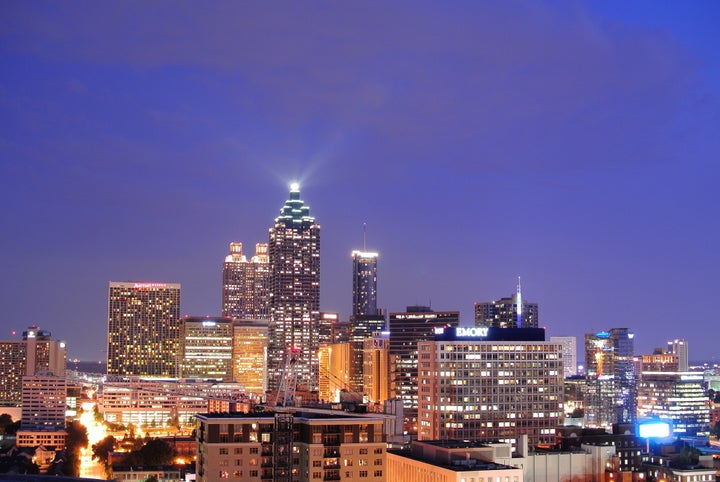
Renewable Energy in Atlanta

The city of Atlanta has declared that they will transition to 100% use of renewable energy by 2035.  The city has also stated that government buildings will be 100% green by 2025.  One local politician said "We know that moving to clean energy will create good jobs, clean up our air and water and lower our residents’ utility bills,” another local politician said “We never thought we’d be away from landline phones or desktop computers, but today we carry our smart phones around and they’re more powerful than anything we used to have. We have to set an ambitious goal or we’re never going to get there.”


It seems like Atlanta is taking many right steps towards the great goal of future non-reliance on fossil fuels. They are even trying to improve their economy at the same time. They are setting a great example for other cities around the globe.
Image result for atlanta

Hopefully the rest of the world will be soon to follow this path to saving the Earth.

4D theater jazz homis ye


A new 4D Theater has opened in the Michigan Science center. The theater will play the world's only 4D version of Extreme Weather. The goal is to educate children on Science Technology and Math.  This should spark interest with a state of the art visuals enhanced setting to create a “4D experience”. Toyota has donated $1.4 million to the theater in the hopes of “fostering innovative thinking” in the minds of children. The center also plans on creating program and education initiatives for the city's education system. This is significant because these fields are essential for the developing future.

Link to the trailer https://www.youtube.com/watch?v=yrOYxLt9SCI

I'm gonna talk about a bridge!

Throw back to all the time ago when we built bridges! Here's a crazy bridge!
BRIDGES! 

        So, over April vacation, I went on a long trip to north Carolina. On our way back, we wen over this highway/ bridge thing that had underwater tunnels in Virginia. It was insane! Being that I love tunnels and having it seem like I was driving on the ocean, I had to know how this thing worked!!

        Its a 23 mile bridge, but it wasn't like a bridge bridge, with an arch or anything. It is a 23 mile fixed link bridge with two 1 mile underwater tunnels! There are 4 high level bridges dispersed throughout the 23 miles of flat bridge. They somehow figured out a way to make the tunnels resistant to the pressure of the current and waves.

        I thought, wow this must have been made recently, it seems like a new sort of thing! BUT ! It was made in the 60's! Not only did they figure out how to make this work 60 years ago, but they did such a good job with it that its still here today!!! They've even been planning on making it longer and making the tunnels deeper and wider. 


"Plans to replace the two-lane tunnels with new and deeper four-lane versions were postponed indefinitely in 2005 at the direction of the Virginia General Assembly. "


WOAH!


WOAH!


WOAH!

Cutting down on cancer surgeries

Jake Fitting
Mr. Gray
5/23/17
Engineering .1

Recently, this past week engineers have discovered a new finding that can reduce the number of follow up cancer surgeries. Engineers at the optical imagining laboratory have developed new imagining technology, that is supposed to cut down on the number of follow up surgeries. The technology is focused on treatment for cancer patients. The technology will allow doctors to see if the tumor is not fully removed yet. The engineers behind the design hope that this creation will reduce the number of follow up surgeries for cancer.
How does it work? The new invention uses light and sounds to make sure that all of the lumps of cancer, or tumors have been removed. This will be extremely helpful to cancer patients because this means some patients will only have to go through one surgery. On average about 300,000 new cases of breast cancer are discovered ever year. Of that number 75% of these patients have to take a follow up surgery this invention  will reduce this number tremendously which will save money and can save someones body because surgery can be dangerous.

"Photo acoustic microscopy, or PAM, excites a tissue sample with a low-energy laser, which causes the tissue to vibrate". This type of device is designed to measure the ultrasonic waves that come from the vibrating tissue. 
Engineer, Mr. Wang and his team published an article about the device that explain how it functions and what its purpose is. Wang explained how his work not only focuses on breast cancer patients but also patients that were diagnosed with other forms of cancer. This does not relate to what we are focusing on in class but it grasped my interest because it has the potential to help a lot of people. 


https://www.sciencedaily.com/releases/2017/05/170517154728.htm

Fowler Blog #7 - The Final Blog: Amazon Go


Outside Amazon's first "Amazon Go" retail store in Seattle. (GeekWire Photo / Nat Levy)

Amazon Go: The First High Tech Grocery Store Is Underway

At the new Amazon Go store in Seattle, coming early 2017, shoppers use their smartphone to buzz in and out of the store. (Amazon Photo Via YouTube)Amazon, known for their massive online shopping service, Amazon and Amazon Prime, and their popular web hosting service, AWS (Amazon Web Services), has now taken tech to where it has never been before, the grocery store. This grocery store promises a convenient and quick shopping experience. Amazon promises that there will be no check outlines. The idea is that the store identifies the shopper entering the store and can keep track of what they are looking to buy. When the shopper walks out, the purchase is processed and completed for everything they left with.

How Does It Work?
So the tech is under development but the current technology in use is radio frequency identification or RFID. RFID is used to identify each unique personal cell phone that enters the store to identify the shopper. The store keeps track of the virtual cart and then is added up and charged when the shopper leaves. This same RFID sensor is what identifies the shopper when they are ready to checkout and leave. The shopper, rather than the user having to stop and check out with a cashier and because the picked items are already known and stored in a virtual cart list associated with the shoppers Amazon account, the shopper may simply exit the retail location with the items. The exit of the user will be detected by the RFID and, as the shopper passes through the exit, without having to stop, will automatically be charged a for the cost of the items.
Amazon's system automatically detects when a shopper picks up an item, and adds it to a virtual cart. (Amazon Image via YouTube)
The technology right now is not perfect.  The store has a large inventory management system (IMS). The system uses cameras and other sensors on the shelves to know what item is picked up or put down, identifies the shopper who selected it and adds or removes that item from the shopper's virtual cart. If this process fails and the IMS cannot determine if the picked item is a bottle of ketchup or a bottle of mustard, the IMS can use the shopper's past purchase history and what items the shopper has already added to their virtual cart from other shelves in the store. So if the shopper has only picked up and purchased ketchup in the past, that information can be used to determine that the shopper most likely picked up ketchup from the shelf instead of mustard.

See It In Action:

This is a video put out by Amazon filmed in their test store on 2131 7th Ave. in New York City. The video is a good representation of this shopping experience. Currently the only people who can shop here are Amazon Employees but the end goal will be to not only open up more Amazon Locations but license this technology to other existing stores the same way that Amazon licenses their web hosting technology (AWS) to other companies. Shareing this technology would be a better approach to this martket rather than trying to compete with other already existing massive retailers. Hopefully we will see this technology implemented in the future becuase it is very usefull and convient. 


The Final Blog is done :) Thank you for an amazing year and being an amazing teacher and mentor. Ill try to come back and help with robotics next year when I can!

A Boring Company


Elon Musk, the CEO of Tesla and SpaceX and now the boring company, recently took delivery of a massive tunneling machine. The machine is 40 feet long with a diameter of 26 feet and weighs approximately 1,200 tons. The machine has been positioned to dig a hole in the parking lot of SpaceX. Musk has plans to test its tunneling capabilities and gather research for possible tunnel systems. The current rate is 300 feet per week however Musk believes they could eventually achieve 1 mile per week.  The company envisions a future with “vast underground transport network”. The plan is to begin the tunnels in LA. This makes sense as roadways are overcrowded and parking is sparse in cities. Possible setbacks include time and overcoming the earthquakes of southern California.