Sunday, May 28, 2017

VR and Mental Health


A growing body of evidence suggests that virtual reality (VR) technology can be an effective part of treatment for phobias, posttraumatic stress disorder, and other mental health conditions, according to a research review in the May/June issue of the Harvard Review of Psychiatry.


"Virtual reality is potentially a powerful tool for the psychiatric community," says author Jessica L. Maples-Keller, PhD, of University of Georgia. "It allows providers to create computer-generated environments in a controlled setting, which can be used to create a sense of presence and immersion in the feared environment for individuals suffering from anxiety disorders." The review appears as part of a special theme issue of Harvard Review of Psychiatry, focusing on Emerging Technology and Telehealth in Psychiatric Care. Dr. Maples-Keller and colleagues review the current state of research on VR technology for psychiatric treatment. So far, research in this area has focused on exposure-based treatment for certain types of anxiety disorders. Studies have evaluated VR applications for progressive exposure to frightening situations in patients with specific phobias -- especially fear of flying. Other studies have evaluated the use of VR for treatment of post-traumatic stress disorder in combat veterans.
Virtual reality applications can simulate exposures that would be costly or impractical to re-create in real life, such as airplane flight or combat conditions. It also enables the therapist to control the "dose" and specific aspects of the exposure environment. For example, the patient can "virtually" experience repeated takeoffs and landings without going on an actual flight. Based on available evidence, VR has significant benefits in these types of anxiety disorders. Studies of flight phobia have reported significant and lasting reductions in flight-related anxiety. Patients report satisfaction with VR-based therapy, and in some cases find it more acceptable than traditional therapy.
This research is leading to an important question: what other benefits of VR have yet to be discovered?


Tuesday, May 23, 2017

Renewable Energy in Atlanta

The city of Atlanta has declared that they will transition to 100% use of renewable energy by 2035.  The city has also stated that government buildings will be 100% green by 2025.  One local politician said "We know that moving to clean energy will create good jobs, clean up our air and water and lower our residents’ utility bills,” another local politician said “We never thought we’d be away from landline phones or desktop computers, but today we carry our smart phones around and they’re more powerful than anything we used to have. We have to set an ambitious goal or we’re never going to get there.”


It seems like Atlanta is taking many right steps towards the great goal of future non-reliance on fossil fuels. They are even trying to improve their economy at the same time. They are setting a great example for other cities around the globe.
Image result for atlanta

Hopefully the rest of the world will be soon to follow this path to saving the Earth.

4D theater jazz homis ye


A new 4D Theater has opened in the Michigan Science center. The theater will play the world's only 4D version of Extreme Weather. The goal is to educate children on Science Technology and Math.  This should spark interest with a state of the art visuals enhanced setting to create a “4D experience”. Toyota has donated $1.4 million to the theater in the hopes of “fostering innovative thinking” in the minds of children. The center also plans on creating program and education initiatives for the city's education system. This is significant because these fields are essential for the developing future.

Link to the trailer https://www.youtube.com/watch?v=yrOYxLt9SCI

I'm gonna talk about a bridge!

Throw back to all the time ago when we built bridges! Here's a crazy bridge!
BRIDGES! 

        So, over April vacation, I went on a long trip to north Carolina. On our way back, we wen over this highway/ bridge thing that had underwater tunnels in Virginia. It was insane! Being that I love tunnels and having it seem like I was driving on the ocean, I had to know how this thing worked!!

        Its a 23 mile bridge, but it wasn't like a bridge bridge, with an arch or anything. It is a 23 mile fixed link bridge with two 1 mile underwater tunnels! There are 4 high level bridges dispersed throughout the 23 miles of flat bridge. They somehow figured out a way to make the tunnels resistant to the pressure of the current and waves.

        I thought, wow this must have been made recently, it seems like a new sort of thing! BUT ! It was made in the 60's! Not only did they figure out how to make this work 60 years ago, but they did such a good job with it that its still here today!!! They've even been planning on making it longer and making the tunnels deeper and wider. 


"Plans to replace the two-lane tunnels with new and deeper four-lane versions were postponed indefinitely in 2005 at the direction of the Virginia General Assembly. "


WOAH!


WOAH!


WOAH!

Cutting down on cancer surgeries

Jake Fitting
Mr. Gray
5/23/17
Engineering .1

Recently, this past week engineers have discovered a new finding that can reduce the number of follow up cancer surgeries. Engineers at the optical imagining laboratory have developed new imagining technology, that is supposed to cut down on the number of follow up surgeries. The technology is focused on treatment for cancer patients. The technology will allow doctors to see if the tumor is not fully removed yet. The engineers behind the design hope that this creation will reduce the number of follow up surgeries for cancer.
How does it work? The new invention uses light and sounds to make sure that all of the lumps of cancer, or tumors have been removed. This will be extremely helpful to cancer patients because this means some patients will only have to go through one surgery. On average about 300,000 new cases of breast cancer are discovered ever year. Of that number 75% of these patients have to take a follow up surgery this invention  will reduce this number tremendously which will save money and can save someones body because surgery can be dangerous.

"Photo acoustic microscopy, or PAM, excites a tissue sample with a low-energy laser, which causes the tissue to vibrate". This type of device is designed to measure the ultrasonic waves that come from the vibrating tissue. 
Engineer, Mr. Wang and his team published an article about the device that explain how it functions and what its purpose is. Wang explained how his work not only focuses on breast cancer patients but also patients that were diagnosed with other forms of cancer. This does not relate to what we are focusing on in class but it grasped my interest because it has the potential to help a lot of people. 


https://www.sciencedaily.com/releases/2017/05/170517154728.htm

Fowler Blog #7 - The Final Blog: Amazon Go


Outside Amazon's first "Amazon Go" retail store in Seattle. (GeekWire Photo / Nat Levy)

Amazon Go: The First High Tech Grocery Store Is Underway

At the new Amazon Go store in Seattle, coming early 2017, shoppers use their smartphone to buzz in and out of the store. (Amazon Photo Via YouTube)Amazon, known for their massive online shopping service, Amazon and Amazon Prime, and their popular web hosting service, AWS (Amazon Web Services), has now taken tech to where it has never been before, the grocery store. This grocery store promises a convenient and quick shopping experience. Amazon promises that there will be no check outlines. The idea is that the store identifies the shopper entering the store and can keep track of what they are looking to buy. When the shopper walks out, the purchase is processed and completed for everything they left with.

How Does It Work?
So the tech is under development but the current technology in use is radio frequency identification or RFID. RFID is used to identify each unique personal cell phone that enters the store to identify the shopper. The store keeps track of the virtual cart and then is added up and charged when the shopper leaves. This same RFID sensor is what identifies the shopper when they are ready to checkout and leave. The shopper, rather than the user having to stop and check out with a cashier and because the picked items are already known and stored in a virtual cart list associated with the shoppers Amazon account, the shopper may simply exit the retail location with the items. The exit of the user will be detected by the RFID and, as the shopper passes through the exit, without having to stop, will automatically be charged a for the cost of the items.
Amazon's system automatically detects when a shopper picks up an item, and adds it to a virtual cart. (Amazon Image via YouTube)
The technology right now is not perfect.  The store has a large inventory management system (IMS). The system uses cameras and other sensors on the shelves to know what item is picked up or put down, identifies the shopper who selected it and adds or removes that item from the shopper's virtual cart. If this process fails and the IMS cannot determine if the picked item is a bottle of ketchup or a bottle of mustard, the IMS can use the shopper's past purchase history and what items the shopper has already added to their virtual cart from other shelves in the store. So if the shopper has only picked up and purchased ketchup in the past, that information can be used to determine that the shopper most likely picked up ketchup from the shelf instead of mustard.

See It In Action:

This is a video put out by Amazon filmed in their test store on 2131 7th Ave. in New York City. The video is a good representation of this shopping experience. Currently the only people who can shop here are Amazon Employees but the end goal will be to not only open up more Amazon Locations but license this technology to other existing stores the same way that Amazon licenses their web hosting technology (AWS) to other companies. Shareing this technology would be a better approach to this martket rather than trying to compete with other already existing massive retailers. Hopefully we will see this technology implemented in the future becuase it is very usefull and convient. 


The Final Blog is done :) Thank you for an amazing year and being an amazing teacher and mentor. Ill try to come back and help with robotics next year when I can!

A Boring Company


Elon Musk, the CEO of Tesla and SpaceX and now the boring company, recently took delivery of a massive tunneling machine. The machine is 40 feet long with a diameter of 26 feet and weighs approximately 1,200 tons. The machine has been positioned to dig a hole in the parking lot of SpaceX. Musk has plans to test its tunneling capabilities and gather research for possible tunnel systems. The current rate is 300 feet per week however Musk believes they could eventually achieve 1 mile per week.  The company envisions a future with “vast underground transport network”. The plan is to begin the tunnels in LA. This makes sense as roadways are overcrowded and parking is sparse in cities. Possible setbacks include time and overcoming the earthquakes of southern California.

Monday, May 22, 2017

Rain Drop, Drop Top, Rain Altering the Surface of Mars Has Come to a Full Stop

Billions of years ago, heavy rain shaped the impact craters on Mars and created river-like channels in its surrounding face.  This is significant because it does not rain on Mars anymore, but like Earth and the moon, Mars has many craters and valleys that have been shaped by intense rainfall.


Geologists Dr. Robert Craddock and Dr. Ralph Lorenz, who conducted a study through the Smithsonian Institution and the Johns Hopkins University Applied Physics Laboratory, discovered that the craters and valleys found on Mars are the result of rainfall from millions of years ago.

"Many people have analyzed the nature of rainfall on the Earth, but no one had thought to apply the physics to understanding the early Martian atmosphere," said Dr. Craddock

Because Mars had a more substantial atmosphere when it formed 4.5 billion years ago, high pressure caused heavy rain drops in large doses to fall.  Perhaps millions of years since forming, rain drops on Mars became large enough to penetrate the soil and begin to shape the craters as we know them today.  After a long time the water was channeled and cut through the planet's surface, resulting in valleys similar to those we are accustomed to on Earth.

Image result for rain

"By using basic physical principles to understand the relationship between the atmosphere, raindrop size and rainfall intensity, we have shown that Mars would have seen some pretty big raindrops that would have been able to make more drastic changes to the surface than the earlier fog-like droplets," said Dr. Lorenz.


Image result for mars


In its earliest stages, the atmosphere on Mars was approximately 4 bars on the atmospheric scale.  Earth's present day atmosphere is 1 bar.  With a 4 bar atmosphere, Mars' rain was nothing more than a mist and could impose no changes on its surface.  However as time progressed, atmospheric pressure dropped to 1.5 bars, producing rain drops large enough to penetrate the planet's surface.  Craddock and Lorenz concluded that if Mars had the same atmospheric pressure back then as Earth has now, its rain drops would have been roughly 7.3 millimeters long, which is 1 millimeter bigger than the average rain drop on Earth.

Logan Liljeberg Blog #7- Exoskeleton for soldiers

Tuesday, May 23rd, 2017
Logan Liljeberg

Exoskeleton for Soldiers   

For the last blog post of the year I found an interesting article from Phys.org.  The article talked about a new technology that can help soldiers who carry heavy gear over long distances and terrain.  The stress of the weight can damage the joints of the soldiers and leave them tired from long expeditions over tough terrain.  This can lead to exhaustion and injury to the soldiers, so a new exoskeleton from Lockheed Martin has been created to help this.  They have created a FORTIS knee stress release device.  After reading the article it seems like a great invention and idea, which can help soldiers in the military.       


Lockheed Martin has created a FORTIS knee stress release device that is computer-controlled that counteracts over stress on the lower back and legs.  This helps to increases mobility and load-carrying capability for the soldiers.  It also boosts leg capacity for physically demanding tasks that require repetitive or continuous kneeling, squatting, or lifting, as well as carrying or climbing with heavy loads.  The reader can see that this knee brace could have a serious impact for soldiers in the military who have to carry heavy loads.  This knee brace could help with the heavy loads they carry from gear and weapons, which could make their journeys much easier.  It resembles an ACL brace, where it secures the knee but allows for movement of the leg.  


The FORTIS K-SRD has sensors that can track the soldiers speed, direction, and angle of movement to a computer in the brace.  This sends messages to electro-mechanical actuators at the knees. The exoskeleton delivers torque at the right time to assist knee flex and extension. The FORTIS K-SRD knee brace ultimately reduces energy needed to cross terrain, squat or kneel.  These benefit soldiers who are climbing or descending terrain during missions.

Versions of the exoskeleton are available for industrial workers and first responders who have to perform strenuous tasks in difficult environments.  The knee brace from Lockheed Martin seems to be a big invention for the military force.  If they can get this technology down and make it work, it can have huge benefits.  Soldiers will be able to carry more weight and not have a tough time doing so with the brace on.  It is good to see technology being made for our soldiers who put their life on the line to serve our country.  

Overall, this was the another great article that I found for my blog.  The idea hooked me right away and I knew it was going to be something very interesting.  I hope Lockheed Martin keeps up the hard work and is able to finalize the FORTIS K-SRD.   It would be awesome if the men in the military can have something that will reduce the stress on their legs and back from the weight they carry.  It would be awesome to give back to the members of the military who put their lives on the line for us to protect our freedom.  This invention is very cool and I hope it works out for Lockheed Martin and his team! 

 LAST BLOG EVER IS DONE!!!!!  


Prosthetics you can control with your mind

A patient in the Netherlands just received a prosthetic arm that he is able to control with his thoughts. This arm is "click-on" and is attached by a metal rod that is attached to the bone of the patient through multiple surgeries. He had to have three surgeries to attach the rod to the bone, one attaching the initial rod to bone, one to attach a rod that protrudes from the patients arm to the rod in the bone, and one to reconstruct the muscle around the bone and attaching the nerves that were in the hand to the remainder of the arm from the amputation amplifying the signals that go through that part of the arm. This last surgery is crucial because they then attach a band of electrodes around the arm that can pick up the signal of the muscles in the upper arm contracting in such a way that would close the hand, and close the hand on the prosthetic. The rehabilitation to be able to do this is rigorous for the patient because they must learn what it is like to close their hand again even though they may not have had it for many years. This is a huge leap forward for prosthetics, and amputees because this is the first step in creating prosthetic limbs that work just as well as the originals.

Blog #7- Cleaner Water with Carbon Dioxide

Mollie Maggiacomo
.1 Engineering
Period A


A new study out of the Engineering school at Princeton University features a new way to clean water by using the same technique of that used to create fizz in soda. This new invention eliminates the need for costly and complex water filters by using carbon dioxide.
HOW IT WORKS:
The system injects CO2 gas into the water stream. This gas mixes with the water in a series of channels and temporarily changes the waters chemistry. These chemical changes allow the contaminating particles to move to one side based on their electrical charge. The scientists are then able to split the water stream and filter out the particles. Carbon dioxide alters waters chemistry and gives it the "tart" taste that is familiar in sodas. The CO2 dissolves in the water and creates charged particles called ions. The ions' movement through the water creates an electric field; this subtle electric field attracts particles to one side of the water stream.  Because this electric field takes advantage of filtering out particles, the scientists device hold two channels of water, one of contaminated particles and one of clean water. Their device, in order to maintain the electric field, made the channel walls out of silicone rubber. This also allows the capture of carbon dioxide for later use. When the process is finished, the CO2 can be released from the water into the air so that it contains normal levels of CO2 and is not carbonated.  


WHY IT'S GOOD 
"You could potentially use this to clean water from a pond or river that has bacteria and dirt particles," -Sangwoo Shin (an assistant professor of mechanical engineering at the University of Hawaii at Manoa). Shin says that this system could be useful in developing areas because it does not require installation or changing of filers. Shin says that it could produce 100 liters of water an hour. It could also be an alternate to desalination plants.  "Shin said the carbon dioxide system could strain out the particles before or after the water passes through the desalinization membrane, reducing the need to treat the water with chemicals such as chlorine." Shin is working on ways to make this system larger scale in order to supple bigger communities such as his home state, Hawaii, where there is a fresh water problem. 


Blog 7

Graphane could act as efficient and water-free hydrogen fuel cell membrane


Researchers at the University of Pittsburgh's Swanson School of Engineering have found that the unusual properties of graphane -- a two-dimensional polymer of carbon and hydrogen -- could form a type of anhydrous "bucket brigade" that transports protons without the need for water, potentially leading to the development of more efficient hydrogen fuel cells for vehicles and other energy systems.
The principal investigator is Karl Johnson, the William Kepler Whiteford Professor in the Swanson School's Department of Chemical & Petroleum Engineering, and graduate research assistant Abhishek Bagusetty is the lead author. Their work, "Facile Anhydrous Proton Transport on Hydroxyl Functionalized Graphane" (DOI: 10.1103/PhysRevLett.118.186101), was published this week in Physical Review Letters. Computational modeling techniques coupled with the high performance computational infrastructure at the University's Center for Research Computing enabled them to design this potentially groundbreaking material.
Hydrogen fuels cells are like a battery that can be recharged with hydrogen and oxygen. The hydrogen enters one side of the fuel cell, where it is broken down into protons (hydrogen ions) and electrons, while oxygen enters the other side and is ultimately chemically combined with the protons and electrons to produce water, releasing a great deal of energy.
At the heart of the fuel cell is a proton exchange membrane (PEM). These membranes mostly rely on water to aid in the conduction of protons across the membranes. Everything works well unless the temperature gets too high or the humidity drops, which depletes the membrane of water and stops the protons from migrating across the membrane. Dr. Johnson explains that for this reason, there is keen interest in developing new membrane materials that can operate at very low water levels-or even in the complete absence of water (anhydrously).
"PEMs in today's hydrogen fuel cells are made of a polymer called Nafion, which only conducts protons when it has the right amount of water on it," says Dr. Johnson. "Too little water, the membrane dries out and protons stop moving. Too much and the membrane "floods" and stops operating, similar to how you could flood a carbureted engine with too much gasoline," he added.
Dr. Johnson and his team focused on graphane because when functionalized with hydroxyl groups it creates a more stable, insulating membrane to conduct protons. "Our computational modeling showed that because of graphane's unique structure, it is well suited to rapidly conduct protons across the membrane and electrons across the circuit under anhydrous conditions," Dr. Johnson said. "This would enable hydrogen fuel cell cars to be a more practical alternative vehicle."

$20 billion deal


Clariant and Huntsman to join in $20 billion deal

Swiss specialty chemical company Clariant will combine with U.S. chemical maker Huntsman Corp. in a merger of equals valued at about $20 billion. By joining, the companies hope to better compete in high-growth markets, expand profit margins, and cut operating costs. The new company will be called HuntsmanClariant and will combine Huntsman’s advanced materials, performance products, polyurethanes, and textile effects businesses with Clariant’s catalysts, personal care, oil and gas, and plastics and coatings businesses. The two firms expect the deal to close by the end of the year. With annual sales of about $14 billion, HuntsmanClariant will vie with Covestro to be the world’s second-largest specialty chemical maker after Evonik Industries. In recent years both Clariant and Huntsman have sought to sell off lower-value businesses. In 2012, Clariant divested its textile and paper chemicals business, and it has recently worked to spin off its plastics and coatings businesses. The latter will stay in the new firm’s portfolio for now. Huntsman will complete the planned separation of its pigments and additives business, to be called Venator Materials, this summer. In March, Huntsman said it was evaluating other options, including a merger, to increase shareholder value. Once the deal closes, Huntsman shareholders will own 48% of the new company based on the difference in the values of the two firm’s shares. Peter R. Huntsman, Huntsman’s CEO, will serve as CEO of HuntsmanClariant, and Clariant CEO Hariolf Kottmann will be chair of the board. Clariant’s home base in Pratteln, Switzerland, will be the new firm’s headquarters, and operations will be in The Woodlands, Texas, where Huntsman is based. The firms say HuntsmanClariant will be more profitable than either stand-alone company, in part because of a projected $400 million in annual cost savings. Its combined profit margin of 17.2% will outpace Clariant’s 15.2% and Huntsman’s 13.4%, they say. HuntsmanClariant’s largest end market will be consumer specialties, including chemicals used in personal care, packaging, and textiles. The executives also stress complementary businesses aimed at automotive manufacturing. “Clariant and Huntsman are joining forces to gain much broader global reach, create more sustained innovation power, and achieve new growth opportunities,” Kottmann says. Peter Huntsman adds, “Together, we will create a global leader in specialty chemicals with a combined balance sheet providing substantial financial strength and flexibility.” The merger is subject to approval by shareholders and regulators. Shareholder reaction to the news was mixed. Clariant shares closed up 3.5% on May 22, the day the deal was announced; Huntsman shares were down slightly in midday May 22 trading.

Blog 7

New best super computer in the world !

Taihu Shenwei light "is according to the national Ministry of science and technology development plan of 863, with nearly 3 years development cycle. As we all know, the last TOP500's first "Tianhe two" was built using the Intel processor in the United states. Because the United States in super CPU of China embargo, and China has always advocated the independent research and development, so they Taihu light "is the first super computer processor used in all domestic construction. Although Chinese due to independent CPU started late, but in the process of backward technology under the condition of complete performance refresh and reduced power consumption two breakthrough, therefore, can be said that the United States embargo forced chip China independent research and development process and speed. 


"Taihu Shenwei light" super computer cabinet consists of 40 operational and 8 network cabinet, each operation cabinet comprises 4 blocks consisting of 32 pieces of operation plug-in super nodes, each of which consists of 4 operational node plug-in board. But as Shen Wei SW1600C processor before aspirations list the title of "Taihu Shenwei light" obviously can not be used, so the node in each operation is equipped with 2 pieces of Shen Wei of SW26010 high performance processor, so a cabinet has 1024 processor, a "power Taihu light" a total of 40960 processor.

Shen Wei SW26010 is China's own intellectual property rights processor, developed by the Jiangnan Computing Institute, using Alpha 64 bit RSIC architecture and 65nm manufacturing process, out-of-order execution. Shen Wei SW26010 consists of 4 MPE (Management Processing Element) management unit, 4 CPE (Computing Processing Element) calculation unit and 4 MC memory controller unit, the CPE unit is composed of 64 core 8x8 array composed of a total of 260 core.

Performance, "peak performance 125.436PFlops Taihu Shenwei light" super computer system, continuous performance 93.015PFlops, performance and power consumption ratio has reached 6051MFlops/ W, the three parameters are the first in the world, and than the runner up "Tianhe No. two" nearly two times faster, but also improve the efficiency of 3 times. What's the concept? People have done statistics, "Taihu Shenwei light" performance and production in 2016 about 2000000 PC and 1 minutes flat, computing power is equivalent to 7 billion 200 million people worldwide with 32 years of uninterrupted computing calculator.


 It is understood that in the global top 500 supercomputers on the list of the top ten in addition to the "Shenwei Taihu light", and "China Tianhe No. two", the "Titan" and "Sequoia", Japan's "Beijing", American "Mira" and "31", "Switzerland gornt peak", German "Bonasa bonasia" and "II Shaheen of Saudi arabia". But in speed, "3 times Taihu Shenwei light" to "Tianhe No. two", 5 times the United States "Titan", the sum of more than 4 supercomputer computing speed ranked second to fifth.

It is not the first time that china's super cpmputer become the best in the world. It shows that on the supercomputers, China has made unprecedented progress in speed and breadth. 
Brenden Cavaco
Engineering .1 Period A
5/17/2017

Blog #7

http://news.mit.edu/2017/using-light-propel-water-0425

After reading through the MIT news, I have previously learned about a new discovery that will help expand engineering. MIT has learned that they can use light sources to move and propel water.
Using light to propel water will be good for field systems that can separate oil from water at a drilling rig.

Finding out they could propel water through light sources by wettability. By causing individual droplets of water to coalesce and spread across the surface allowed them the best way to separate water and oil. Propelling water from oil will help fracking be more effective and stop contaminating household water. After observing the water mixed with the oil they noticed that the thicker the droplet, the harder it is it to separate the two. Since it is difficult to separate thick droplets, scientists decided to go down the route of photoresponsive surfaces.

Scientists studied titania which is found in sunscreen. Titania has a 5% of sunlight in the ultraviolet range. By creating a higher ultraviolet range, scientist used multiple polymer bound titania particles mixed with organic dye on glass. When activating sunlight onto the titania, the water and dye began to disperse from one another. Researchers learned that they could directly separate the oil from the water by causing individual droplets of water to coalesce and spread across the surface. The more the water droplets fuse together, the more they separate from the oil.

MIT associate professor of mechanical engineering Kripa Varansi said, "This creates an electric potential difference to be established between the surface and the liquid upon illumination, and leads to a change in the wetting properties.”

If we look back on the BP oil spill, the salt water and oil did not mixture together. Due to the saline water and sunlight directed on the mess, the oil did not disperse below the surface. Due to the ultraviolet range in the ocean helped disperse one another propel water away from the oil.

Researchers also learned that they can create a boundary that is not physically made. They can use a moving beam of light that allows you to direct water in any way.

The discovery of directing water based on ultraviolet range and light sources is very useful in the engineering field. Researchers will now be able to provide more discoveries and facts to real world jobs. This will help people prevent problems that works with oil and water, such as HVAC, engineers etc. In conclusion, the discovery of wettability is very important for the future of STEM.


Below is a link to a video that helps the explanation of Wettability.
https://www.youtube.com/watch?v=2LfTrgmleAY


New Robotic Fish for Environmental Monitoring

Michael Sullivan 
Period A. 

Universidad Politécnica de Madrid. "New robotic fish for environmental monitoring." ScienceDaily. ScienceDaily, 10 May 2017. 

Many fish in our oceans are becoming endangered or even extinct without any good way to monitor or save them. Researchers from Universidad Politécnica de Madrid and University of Florence are developing a bio-inspired robot equipped with special chemical sensors able to detect the pH of water. These sensors will monitor the water quality where the fish are living. These robots mimic a swimming fish in order to minimize the stress of the fish around it. This robot is bio-mimetic, that is, that mimics both its appearance and its functioning. In addition to providing water data, the robotic fish is also able to modify the way they swim according to the water conditions with the purpose of, for example, to detect and highlight the areas of concentration.

Prototype of the robotic fish

Aquaculture has become the fastest growing animal food sector in the world. Today, the production of fish, crustaceans and shellfish supplies around fifty percentages of all fish that is consumed by humans globally. In order to keep aquaculture systems at an optimal level and to avoid physiological stress and disease of fish, water quality and adequate nutrition must be monitored and controlled.

The length of the fish is 30 cm without including the tail. The prototype adopts shape memory alloys actuators that bend a continuous flexible structure made of polycarbonate of 1 mm thickness. An additional structure of ribs was employed to support the latex-based skin. 

According to Claudio Rossi, a developer of this bio-inspired fish, "thanks to this system that provides early information on environmental change, we can control the parameters of water quality and improve management decisions of fish farms, and consequently, the wellness of these animals."

Blog #6 3D Printing is Crazy

Our class has some experience with 3D printing. We've worked with modeling, digital measurements, and designing something to be useful. Experienced 3D printers, or talented digital designers are able to create crazy artwork or even simple gadgets with hinges built in. Now 3D printing is being looked at as a way to help make breakthroughs in technology, rather than being a breakthrough technology itself.
Engineers at UC San Diego utilized a high end printer, which is able to combine rubber materials with the traditional rigid plastic of 3D printing. This allowed the team of engineers to make a "cage" of plastic to contain the brains of the robot, then directly connect the legs, which are made of a hollow rubber and controlled with air. Below is a photo of one of the robots, where the legs and cage can be seen.
Each leg is compromised of three hollow chambers. Each chamber can be inflated or deflated individually. This is what gives the robot the ability to walk, rather than just slide along a surface. A solid leg can't articulate in the same way that the chambered design can.
This new design allows the robot to walk over surfaces that aren't easily navigable by other robots. Another benefit to the 3D printed design is highly reduced costs. Traditionally, molds would have to have been made for each iteration and small design change to the robot. With the printer, each iteration only requires a change in a computer file rather than a new mold. This showcases the practicality of 3D for scientific uses. 

Sunday, May 21, 2017

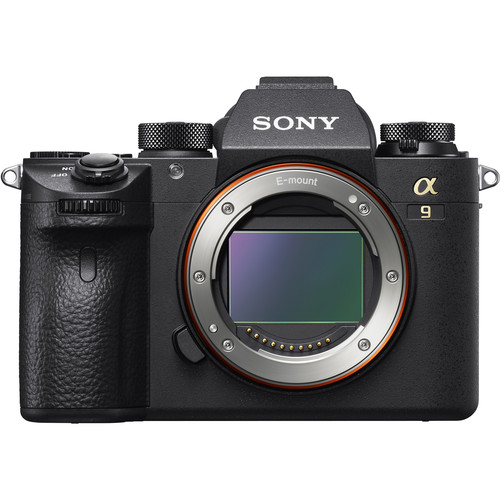
Fowler Blog #6 - Why The Sony Alpha series is actually very important.

        The Sony Alpha a9 was released this week. This is the next iteration of Sony's Alpha series. The Alpha series has been shaking up the camera industry.                                 
Sony Alpha a9 Mirrorless Digital Camera (Body Only)To a professional photogropher, a mirroless camera from 10 years ago would be a joke. It wasnt untill about two years ago when Sony released the best mirrless camera of its time, the Alpha a7, that the camera industry put down their dslrs and read into mirroless. They later toped their own achievemnet with the a7s, their video oriented mirroless camera and the a7r, their photo oriented mirroless camera while the a7 served as the middle ground. Following the a7 series came the updated line, a7II, a7r II and a7s II. Again another achievement. At this point mirroless cameras atarted to get the attention of professional photogrophers. 
Why is this important you may ask. Well as a clear leader in the indusry Sony is not only rapidly pushing to the future but they are also killing off any reminders we have of old SLR and poloroid cameras. The most common camera type right now is a DSLR or digital SLR camera. Its main function is using a mechanial mirror to send a preview to the view-finder, a feature first used on polorid cameras that has lived to this day in DSLR's.


The a9 is the first camera to feature a fully electronic shutter, built in wifi, built in bluetooth, and a onboard lan port, four features that are going to change the camera industry forever. This is becuase camera are finally becomeing more compter than camera. Cellphones becames computers 8 years ago. Game consoles became computers 4 years ago. Televison's and Cars are in the process of becomeing computers and now camera's are becoming full blown computers. In a few years we are bound to see cameras who have enough processing power to take a full sized raw photo, quickly tone correct it, convert it to a full sized hd png, and send it to your phone in seconds while also sending the raw file to your computer over the internet so you can sitdown and edit your photos. 

While this may not be new futuristic tech out right now, it is clearly a big step that is going to catch the eye of the industry and start a golden age for camera technology.