Sunday, May 21, 2017

Fowler Blog #6 - Why The Sony Alpha series is actually very important.

        The Sony Alpha a9 was released this week. This is the next iteration of Sony's Alpha series. The Alpha series has been shaking up the camera industry.                                 

Sony Alpha a9 Mirrorless Digital Camera (Body Only)To a professional photogropher, a mirroless camera from 10 years ago would be a joke. It wasnt untill about two years ago when Sony released the best mirrless camera of its time, the Alpha a7, that the camera industry put down their dslrs and read into mirroless. They later toped their own achievemnet with the a7s, their video oriented mirroless camera and the a7r, their photo oriented mirroless camera while the a7 served as the middle ground. Following the a7 series came the updated line, a7II, a7r II and a7s II. Again another achievement. At this point mirroless cameras atarted to get the attention of professional photogrophers. 
Why is this important you may ask. Well as a clear leader in the indusry Sony is not only rapidly pushing to the future but they are also killing off any reminders we have of old SLR and poloroid cameras. The most common camera type right now is a DSLR or digital SLR camera. Its main function is using a mechanial mirror to send a preview to the view-finder, a feature first used on polorid cameras that has lived to this day in DSLR's.


The a9 is the first camera to feature a fully electronic shutter, built in wifi, built in bluetooth, and a onboard lan port, four features that are going to change the camera industry forever. This is becuase camera are finally becomeing more compter than camera. Cellphones becames computers 8 years ago. Game consoles became computers 4 years ago. Televison's and Cars are in the process of becomeing computers and now camera's are becoming full blown computers. In a few years we are bound to see cameras who have enough processing power to take a full sized raw photo, quickly tone correct it, convert it to a full sized hd png, and send it to your phone in seconds while also sending the raw file to your computer over the internet so you can sitdown and edit your photos. 

While this may not be new futuristic tech out right now, it is clearly a big step that is going to catch the eye of the industry and start a golden age for camera technology.







Planes and Gliders Engineering Blog Post #6

While searching for the right design to make a glider out of I came across many viable designs. If I were to go for a more plane like approach, it would be best to create long thin rectangular wings with no sweep at all to keep the plane stable at low speeds. If the wings are swept back the air does not flow over the wings causing lift, it flows across the span of the wings and does not generate much lift at low speeds. The swept wing also causes much more drag at lower speeds. If the wings were to be swept forward, it would greatly reduce the risk of stalling, but would have similar disadvantages to the swept back wings. At low speeds the wings perpendicular to the fuselage provide the most lift and stability.

Another option was to build a hang glider type design. This was my original idea for a design. I came across the Rogallo Wing design which is the basic hang glider design and was originally used by NASA in order to have things land safely when coming back from space. The paper prototype worked extremely well and was able to travel 10 meters with no issues. My group and I then decided to use kite fabric as the wings. The issue with the kite fabric was it did not hold its shape as the paper did, and struggled to catch the wind and actually work as intended. When I tested outside the glider made of kite fabric acted much like a kite, and not a glider. So I took the skeleton that was used for the original design and used foamboard instead and had a cardboard wing stabilizing the back end stopping it from stalling. With no wind and the weight of an egg, it flew perfectly, but with the wind the design was extremely light so it would catch the air and fly away.Image result for rogallo wing
 

Thursday, May 18, 2017

Blog #7: When Security Engineering meets Nuclear and Computer Engineering: Stuxnet

Christopher Iadeluca

                         When Security Engineering meets Nuclear and Computer Engineering: 

In 2017, virtually anything can have a computer on it. From a fridge (that's a real thing look at this http://www.samsung.com/us/explore/family-hub-refrigerator/) to our phones, just about anything can be connected. But with this comes a new range of threats, which I've written about in previous blog post. Anyone who knows a little about computer history might know about one of, if not thee, most important computer viruses of all time. This virus is Stuxnet, and was responsible for the destruction of 5,084 centrifuges. Centrifuges, in a basic sense, are large cylinders, which spin. When they spin, they enrich nuclear material. However, if they spin too fast, or slow, they can crack, and eventually explode. This was the case for the Nantantz Nuclear Power Plant in 2005, after they were infected with Stuxnet. So how did lines of code destroy years worth of progress in nuclear engineering?

Image result for nuclear centrifuge iran
President Mahmoud Ahmadinejad of Iran
Stuxnet has a very interesting beginning. When it first start, it was a worm. Worms are forms of malware which spread by various means, such as flash drives and email. Eventually, this worm began to circulate. It would make its way onto systems and probe the system to see if it met certain requirements. The probing would search for things like nuclear control system, which the average computer is obviously not going to have. So, if your computer did not have it, that was pretty much it. It would just sit on your hard drive and not really do anything. The only strange thing was, if a flash drive was plugged into the machine, the worm would then copy itself onto the USB. But, aside from that, it was reasonably harmless. This virus spread itself covertly, and if you had it, you probably didn't even know it. That is, unless you're a nuclear power plant located in Iran who just so happens to be enriching uranium. These uranium enrichment plants are running a different operating system, called Step7. Though it is based off of Windows, it is different. Only Step7 systems would feel the full effect of this worm.

Stuxnet diagramOnce it infected a suitable target, small changes began to take place. One of these was the slight increase in the speed of which the centrifuged span. The slight increase in speed would continue to grow, but at a rate that was so slow, most patience engineers would not notice. In addition, it spoofed the speed at which it was spinning, so it appeared as if everything was normal, when in reality, a power plant was on the verge of destruction. In addition, there were thousands of centrifuges, so the chances of one finding the exact machine which was infected was rather unlikely.

The virus eventually infected the Iranian plants, and began to effect the centrifuges. Eventually, the centrifuges broke, and in a chain reaction, 984 centrifuges were destroyed. It is estimated that this slowed down their production by around 30%. This 500 kilobyte program had massive implications, and has dawned a new age of cyber weapons. Around 150,000 lines of code did more damage in a matter of weeks than any other computer virus in the history of computing. Though it has been speculated that the worm/rootkit was written by American and Israeli intelligence agency's, the official origins are unknown. However, what is known, is that Stuxnet was instrumental to the shaping of modern computer engineering and system security.

Wednesday, May 17, 2017

New Invention produces clean water with no filter

Jake Fitting
Mr. Gray
5/17/17
Engineering

Recently, researchers from Princeton University have found a new method to clean water without using a filter. The new method involves carbon dioxide. The carbon dioxide is used to remove the particles that lye in the water. The gas (carbon dioxide) causes a chemical reaction that separates the particles from the water. The researchers working on the project believe that this method can spilt water and the particles found in it without using a filter.
The image below is an example of what takes place during the reaction. The carbon dioxide causes the contaminated water to move to one side, while the particles separate and travel to the other side.


This new finding is extraordinary to many because now the same chemical that adds fizz to soda can now be used to remove dirty particles from water.

How does the system work?
"The system injects CO2 gas into a stream of water as a method of filtering out particles. The gas, which mixes with the water in a system of channels, temporarily changes the water's chemistry." This chemical changes causes the dirty particles to separate from the water which, therefore makes the water clean. The researchers recently published an article on their laboratory scale filter which discussed the most important piece of their invention. This important piece being, the filters efficiency. Due to the design of the filter and the chemicals that are used the filter is more efficient then conventional filters. The system also uses a very small amount of energy because the majority of the energy used is produced from the chemical reaction. 
Do not be surprised if these water filtration systems are popular in the next year or so, because they have the best of both world. They are extremely efficient and use a very small amount of energy. 


Tuesday, May 16, 2017

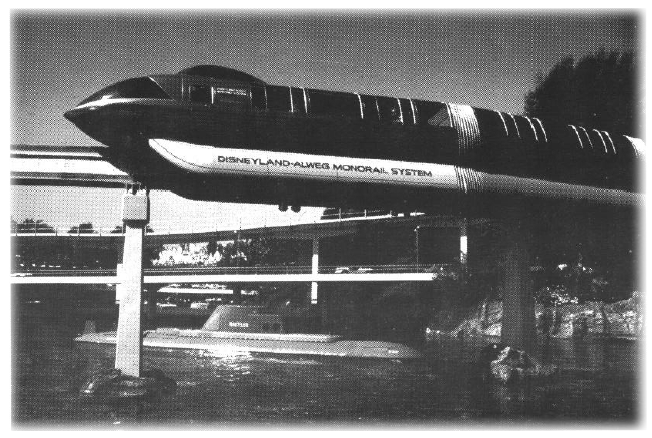
Disneyland Monorail System blog #7


In the 1959 the first commercial Wenner-Gren monorail system was developed by Axel. Wenner-Gren ran his experimental monorail in 1952 on a level track,it was designed to simulate the terrain typical of urban passenger service carrying an average of 340,000 passengers a year and logging 10,000 miles. The original trains were replaced in 1969 and a new fleet introduced in 1987 to upgrade the existing chassis. Each train is electrically powered by 100 horsepower traction motors run at 35 miles per hour. Germany's Schwebebahn at Wuppertal, which is suspended from an overhead rail, is the world's longest running monorail, operating since 1901.


Disneyland Monorail System (1959)

Monday, May 15, 2017

Heat used to power computers

Jake Fitting
Engineering
Period A
Mr. Gray
5/12/17


Normally when working or dealing with computers heat or overheating is a common issue. Many of the world most popular computer companies such as Apple or Microsoft have developed cooling systems in the past to prevent the computer from overheating. Two students from the University of Nebraska thought otherwise.
These two students have been working on an alternative way to generate computer power without overheating. Instead of doing what companies have done in the past, they decided to try to make heat an alternate energy source. "If you think about it, whatever you do with electricity you should (also) be able to do with heat, because they are similar in many ways," says Professor Sidy Ndao.  Ndao said that the device could work if it was over 1000 degrees fahrenheit. The two students are "basically making a thermal computer." 
So you may ask, why should I get a thermal computer rather then a regular one? Well, first thermal computers cannot over heat. Another benefit of having a thermal computer is that we will be able to make calculations in real time, which we haven't been able to do in the past with regular computers. 
Professors and the two students have concluded that the usage of thermal power could improve battery life. This is because almost 60% of energy that is produced in the US is wasted in heat. Now that heat is the main component creating the energy the 60% of heat energy that is normally will actual help to create more energy. This will improve battery life and battery power in new computers.


 Another improved aspect about this computer is that it is also more efficient then its competitors. Some performance issues are still lingering with the device, but overall it is a great new creation for todays society.  


https://www.sciencedaily.com/releases/2017/04/170418094538.htm 
Kyle Emond
Engineering Period A
5/15/17


The future of cars is very bright. As we all got a taste of the first full electric vehicle presented by Tesla a few years ago. In a recent interview with Paul McNamara, technical director of Williams Advanced Engineering he shared his thoughts on the future of the vehicles that will be put on the road. The first thing he recognized is the switch to electrification, a specialism that emerged from the racing team’s development of its own electric motor, battery and control system, and one that is becoming increasingly relevant to the world beyond the race track. If you look at the way automotive powertrains will be, it seems there will be some internal combustion engines, but there will also be hybrids, pure electric vehicles and some sort of fuel cell. Three of those categories involve some sort of battery and control system. Paul McNamara has worked around sports cars seemingly his whole life and now sports cars are turning to electric, the first of which that jumps out to me is the BMW i8.
 The next key capability Paul McNamara spotlights is aerodynamics and thermodynamics, another area of expertise refined on the racetrack that’s becoming increasingly relevant to the wider world. “Energy… is a scarcer resource in a battery car,” he said. If cars are more aerodynamic that’s going to help in the age of battery cars. A key resource is WAE’s (two state-of-the-art wind tunnels), which are increasingly being used to test concepts and refine designs for applications away from the racetrack. For instance, Paul McNamara's facility was used to help develop the handling and improve the aerodynamic performance of Nissan’s futuristic electric concept vehicle called the Blade Glider.

The third key area of specialization is light weighting. An increasingly important area for the wider industry, and a discipline  through its motorsport heritage, is something of a world leader. But while WAE’s track-inspired expertise in making stuff out of carbon fibre has obvious applications in the automotive sector, it’s also leading to unexpected gains elsewhere. For instance, in one recent project, a group at Paul McNamara's facility used its knowledge in this area to develop the Baby Pod, a lightweight crash-proof carbon-fibre pod designed for transporting babies from one hospital to another. Overall, the future of cars is so beyond what we have seen so far. It is exciting to see the progression being made and what is to come in the near future. Through reading this article it reminded me how cars and airplanes design have overlapping similarities, as we factored into our design for our airplane in class.