Wednesday, May 10, 2017

Blog

SpeedX: A new kind of bicycles.

Recently, a Leopard named SpeedX air powered bicycles in the congregation raised platform Kickstarter attracted a lot of attention.
SpeedX Leopard claims to be the first in the market to help users in real time training and tracking process of intelligent air powered bicycle, promised to provide the ultimate road experience. It uses a T1000 military grade carbon fiber frame, weighing only 1.2 kg. On the body of the cycle braking and wiring technology can also reduce drag and drop.


In addition, the SpeedX Leopard handle is also installed a 2.4 inches screen, can be tracked from a number of aspects of the user's cycling state, including single lap time, rhythm, heart rate, speed, power and height. The life of the electronic device can be up to 40 hours (or 497 miles), charging only about 30 minutes. At the same time, the training function named XCoach can provide users with professional guidance.

Sunday, May 7, 2017

Basics of Lift in Airplanes

We deal with four different forces when thinking about flight, gravity, lift, drag, and thrust. All of these can be dealt with in different ways (except for gravity).

The formula used to determine Lift is given by:
L=CL V2 rho/2 S
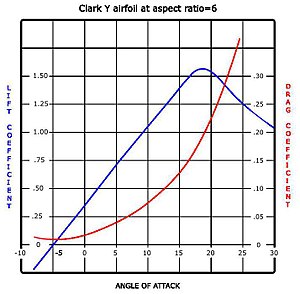
Where L is lift, C is the coefficient of lift (which is based on airfoil shape and is directly proportional to the AOA), V is velocity, rho is air density (which for our specific project can be seen as a constant), S is surface area of the wing.

Example of airfoils found in nature and in the world

Elliptical Wing - Very efficient LD, but the whole wing stalls simultaneously (could cause random failure with no pilot).

Rectangular Wing - Similar efficiency to elliptical wing, easier to build, stalls less harshly.

Tapered Wing - Produces less drag than rectangular wing. If primary concern is speed, tapered wing is better than rectangular. With no washout it may cause stalls.

Swept-Forward Wing- Increased maneuverability. Prevents stalling of ailerons and wingtips, stalls in the wing root.

Washout- Built into wings by slightly twisting root and tip. Helps with stalls (gives the root a larger angle of attack which makes it stall before the tips allowing for correction).

Wednesday, May 3, 2017

3D Printing an Entire Building

Michael Sullivan 
Period A. 

Massachusetts Institute of Technology. "System can 3-D print an entire building: Tech could enable faster, cheaper, more adaptable building construction." ScienceDaily. ScienceDaily, 26 April 2017. <www.sciencedaily.com/releases/2017/04/170426183028.htm>.


3D printing has come a very long way from when it first arrived. It has printed many things including plastic, metal, glass, and even food. Now it can even print a house. Researchers a MIT have designed a system that can print the basic structure of a building. The system has a tracked vehicle that carries a large industrial robotic arm, which has a smaller, precision-motion robotic arm at its end. The researchers say that the building can be built faster and less expensive than traditional methods. Also many properties of the materials can be customized, like strength and insulation. 

The researchers described the system as followed. "The system consists of a tracked vehicle that carries a large, industrial robotic arm, which has a smaller, precision-motion robotic arm at its end. This highly controllable arm can then be used to direct any conventional (or unconventional) construction nozzle, such as those used for pouring concrete or spraying insulation material, as well as additional digital fabrication end effectors, such as a milling head."


The picture above is the free moving "printer." The large arm enables it to stretch and print large structures. Also it is free moving unlike other printers. 

The main difference this system has from other 3D printers is that it can move freely. Many 3D printers are restricted to a certain enclosure and cannot move freely. This means that this printer can make structure almost any size. For a test the researchers had the printer "print" a 50-foot-diameter, 12-foot-high dome which was completed in less than 14 hours of "printing" time.

I think this a great new idea that can really benefit everyone. It can save money and time by having this printer print new houses and buildings.

Failed North Korean Missile Tests: Faulty Engineering or a Covert US Offensive Plan?

Failed North Korean Missile Tests: Faulty Engineering or a Covert US Offensive Plan?

http://thediplomat.com/2017/04/failed-north-korean-missile-tests-faulty-engineering-or-a-covert-us-offensive-plan/

Failed missile tests for the North Korean regime are routine. According to the New York Times, “Eighty-eight percent of the launches of the North’s most threatening missiles have self-destructed since the covert American program [targeting DPRK’s strategic weapons research] was accelerated three years ago.” Notwithstanding these failed attempts, many analysts and observers are seeing signs of the North’s growing nuclear capabilities. In 2016, North Korea conducted several nuclear tests — which detonated more than twice the destructive force of the Hiroshima bomb during WWII. And the latest military showcase, honoring the nation’s founder, Kim Il-sung, Kim Jong-un’s grandfather, is another marker of North Korea’s public military strength.The potential strike or dedicated campaign against North Korea’s nuclear capabilities signals an erosion of President Trump’s “America First” approach of isolationism.  This change in policy can alter the Administration’s course of action, especially with key partners like China. As Vice President Pence alluded, the “era of strategic patience is over” between the two nations. The U.S. appears ready to act with military might, which certainly includes a strong cyber front, to ensure North Korea’s position in the region does not strengthen. Expanding economic sanctions and working multilaterally with the UN has proven futile; therefore, the U.S. may turn to a limited set of unilateral actions aimed at keeping Kim Jung-un in his place.

Withh North Korea still trying to continue this conflict and building more machines and weapons its really going to get us more involved and react back and put a stop to things.

Brenden Cavaco Period A Blog Entry #6

Brenden Cavaco
Engineering .1 Period A
5/2/2017

Blog #6

Genetic Engineering with Harvard and MIT
Date of Article: February 15, 2017

https://www.nytimes.com/2017/02/15/science/broad-institute-harvard-mit-gene-editing-patent.html?rref=collection%2Ftimestopic%2FGenetic%20Engineering&action=click&contentCollection=science&region=stream&module=stream_unit&version=latest&contentPlacement=1&pgtype=collection&_r=0

Engineering is becoming world wide. There is a need for engineering, especially for the increase of technology. No matter the type of field people rely on technology at work, social media, and research. At a large research university such as Harvard and MIT, the schools have retained the ability to use gene editing. The Universities have found a "powerful gene-editing technique that could lead to major advances in medicine and agriculture" according to the federal Patent and Trademark Office. After doing research and having similar comparison to the University of California techniques, the schools will be able to test the technique on twelve people. The experiment will allow scientists to see if this techniques will make an impact on animals', plants', and humans' cells.

The gene editing technique is called Crispr. Crispr can change particular letters in an organism’s DNA. This technique will be able to help people who are currently going through mutations. Being able to have this technique will help for treatments. Scientists will be able to develop new disease treatments that would fix defective genes in the human body. Crispr possibly could make it practical to alter DNA of human embryos. A panel of scientists and people believe that Crispr should only be used for certain situations. The technique should only be used for health purposes such as babies getting a mutation that can lead to severe diseases.

The cost of this technique could possibly be worth multiple millions of dollars. Since the technique is so expensive, panel of scientists suggest to use gene therapy and RNA interference to cope with genetic problems. With the invention of this new technique, stocks of Intellia and Crispr Therapeutics increased by 30%. The technique was first performed on animal, plant, and human cells by Fheng Zhang.


Earlier mentioned that University of California developed the same technique. Due to the competiveness between research facilities, California wanted an interference to occur. Not just did they want to receive credit, but the school wanted to make sure that this technique could work on human cells. Over more research is done and the Crispr is presented to judges of people, the technique is still not ready for human cells. The judges did not provide the schools patents to use on human cells. To this day, scientists continue to do more research and find a way to use for human cells.

When this technique receives a patent, scientists will be able to use this with a purpose. The technique should not be used to create a super human or change the letters of a DNA in a harmful way that creates an even worse mutation. The creation of these new genetic technologies can be helpful, but at the same time can be taken advantage. When Crispr will be fully approved to be used on human cells, it will become a topic if it is moral or not. besides using for health reasons, Crispr should not change the creation of a baby. God made everyone in a certain way and we need to respect that. As a student at LaSalle I have been conflicted to relate science with religion. Usually science and religion do not go hand and hand. Either way, the original purpose of the Crispr is for medication. To help people that go through diseases and mutations.

What I learned from this article is how much engineering is expanding; especially biomedical engineering. Scientists are making a difference and taking their talents to help the medical field.

Below is a link to a video that helps explain more about Crispr.
https://www.youtube.com/watch?v=jAhjPd4uNFY


Tuesday, May 2, 2017

3D-Printing Glass

Mollie MaggiacomoMr. GrayPeriod A5/2/17


Sciencedaily.com


3D- Printing of Glass now possible


             In a recent article posted on ScienceDaily.com, Karlsruhe Institute of Technology has found a way to 3D print extremely small structures using glass. "The scientists mix nanoparticles of high-purity quartz glass and a small quantity of liquid polymer and allow this mixture to be cured by light at specific points – by means of stereolithography." This solution, still a liquid, is washed out in a solvent bath, and what remains is the desired structure. The polymer still left is removed by heat. Bastian E. Rapp, a conductor of research at KIT, explains, “The shape initially resembles that of a pound cake; it is still unstable, and therefore the glass is sintered in a final step, i.e. heated so that the glass particles are fused.” Before, 3D printing techniques had been based on mainly polymer or metals. This innovation allows the 3D printing of high-purity quartz glass. The glass show resolutions in the range of a few micrometers, one thousandth of a millimeter but the structures may have dimensions in the range of a few centimeters. 
            The 3D glass could be used in the future for data technology. This would allow the printing of, "...complex structures out of a large number of very small optical components of different orientations," The system could be used in the biological and medical fields to print miniaturized glass tubes. The 3D printed glass could also be used in optical areas such as eyeglasses and laptop cameras.


Art? and...? enGINEERING? IN ONE??!?!

Engineering meets art! 

Crazy?

            Not as crazy as you'd think!


             "The old art form, origami, creates unique patterns and shapes from paper folding. Today            origami is inspiring engineers to design active materials and smart structures that bend, stretch,          and curve, overcoming traditional design constraints to render products and systems with                    remarkable performance characteristics and features."
Engineers have applied the ideas of origami to a number of different inventions, for example the airbag. The airbag is folded in a very specific way, much like origami.
ALSO ! The National Science Foundation just gave grants to 8 schools to dive deep into origami inspired research 


 “Origami enables products with the ability to fold and then unfold on demand – at any time.”


They're using crazy forward thinking materials in their research, for example,  magneto-active elastomers and polymer films. These flexible materials will allow whatever they're creating to be able to fold and act the way it should.
This origami inspired thinking doesn't just end with research. Ohoh no no no! This research has touched so many aspects of science; Including x rays! 


"...some companies have placed origami-inspired designs into the commercial marketplace, realizing the benefits of products and systems with unique folding capabilities. GE Healthcare recently collaborated with Brigham Young University on a cover for the extension arm of an X-ray machine used in the operating rooms of hospitals. GE required a design improvement over the plastic drapes commonly used to shroud the moveable C-arm; the drapes needed to be replaced every time the device rotated in and out of     the sterile field, adding time as well as cost to surgical procedures."


FOR THE FUTURE

In the future they plan on applying this origami thinking to space exploration, such as self-folding structures as well as deployable large-scale systems, as well as many other super interesting things!!


SO COOL!