For my blog, I found an article about researchers from the University of Queensland.The idea of this article is how the researchers there can fix a common issue in metal. This problem would be embrittlement of the hydrogen alloy. This problem has lead to catastrophic failures in structures.
This is an example of how Hydrogen causes embrittlement.
The hydrogen alloy problem has been around for over 140 years according to Univerity of Queensland Center for Microscopy and Micro-analysis Director, Roger Wepf. This problem causes metals to become brittle and fracture due to the intoduction of hydrogen during processing. An example of embrittlement occurred in 2013, when bolts in the eastern span of the San Francisco- Oakland Bay Bridge failed tests during construction.
Their research collaboration localized and visualized hydrogen in steels and alloys. This will help with new alloys with greater endurance to hydrogen. I found this article very interesting because it shows how far we have come with technology. A single issue that has been around for 140 years has now been fixed because of advancements in technology.
Since early in time people have believed in a connection between numbers and music, maybe even the way the world works and music are very heavily related. Pythagoras, the one behind the pythagorean theorem and many other mathematical calculations was also very involved with music. Just by ear he was able to determine certain notes sounded like they belonged to come one after another. Later with the ability to study sound waves it was discovered that those wave lengths were all getting smaller by an even interval. That is what we call Pythagorean harmonics.
As we progress further into the world that we can not see with just our eyes we realized that particles, smaller than atoms, move in a wavelike rhythm. On the quantum level, these particles do not move as things in the visible world, rather they pop in and out of view very quickly, but their positions can be roughly estimated using mathematics and their behavior is also similar to that of a wave. The fact that both sound and the smallest pieces of our universe behave in a similar fashion is interesting and it could be argued that they relate in more than just a similar way of moving about.
Kyle Emond
Engineering Period A
3/19/17
Today's aircrafts use roughly 80 percent less fuel per passenger per mile than the 1st jets of the 1950s. To me, this is a testimony to the tremendous impact of aerospace engineering on flight. This increased efficiency has extended global commerce to the point where it is now economically viable to ship practically anything across the globe.
In spite of continuous improvements in fuel burning efficiency, global emissions are still expected to increase over next 2 decades due to a doubling in air traffic, so making even small improvements to aircrafts' fuel efficiency can have a tremendous effect on the environment.
Joaquim Martins, an aerospace engineer at the University of Michigan leads the Multidisciplinary Design Optimization Laboratory in an effort to develop tools that let engineers design more efficient aircraft.
Using the Stampede supercomputer at the Texas Advanced Computing Center, as well as computing systems at NASA and UM, Martins has developed improved wing designs capable of burning less fuel, as well as tools that help the aerospace industry build more efficient aircrafts.
Improvements in wing design have the potential to improve efficiency up to 10 percent, lowering costs and pollution. Moreover, in areas where new technologies are being applied on aircrafts, such as for wings made of composite materials or wings that morph during flight. These improved design tools can provide insights where intuitive understanding is lacking.
Today's airplanes feature 50 percent composites materials, but the composites are placed in a relatively simple way. New automatic fiber placement machines, however, can place composites in complex curves, creating what are known as tow-steered composite wings. Joaquin Martins is the first to challenge these seemingly outdated models.
Today, I still see a great area of improvement for aircrafts and this is one step in the right direction. Thousands of people travel by aircrafts daily and the effect they have on the environment is huge. I see this similar to cars, and the steps Tesla have taken to get to where they are today. They started with a model to create the first electric cars, save for the environment, and sustainable energy (for the future). Now, Tesla is releasing its new Model 3 in the summer of 2018, a cheaper model affordable for many more people. In many ways, this is the same with aircrafts. Aircrafts have come a long way considering the safety and speed of transportation they provide for us today. However, there is yet to be a proven model to reduce global emissions, but Joaquim Martins believes he is onto something, and I do to.
According to Arup, the post-tensioned bridge is designed to be assembled in hard to reach sites where large cranes or heavy machinery cannot be used.
Part-funded by the Rail Safety and Standards Board (RSSB) the modular bridge can provide a safer alternative to level crossings where pedestrian bridges cannot be installed.
The first bridge is said to have been installed at a Site of Special Scientific Interest for Network Rail in Oxford. The bridge modules were reportedly light enough to be transported by an articulated lorry and then assembled on site and lifted from a distance.
Based on Arup’s concept, Mabey is launching the bridge under the brand name Pedesta.
Pre-engineered, modular, and fully customisable in its form, material, colour and finish, the Pedesta features include 1m long identical modules that are fixed together with bolted shear connectors and then post-tensioned.
Arup and said the system allows spans of up to 30m, so it can adapt to suit multiple applications. In addition, being 70 per cent lighter than steel, the modules can be moved with a pallet truck or forklift to move.
Rebecca Stewart, associate, Arup said: “We are focused on engineering solutions to make bridges more resilient and simpler to construct.
“This modular bridge is quick and easy to install, minimises disruption to the surrounding communities and significantly reduces ongoing maintenance costs.
“We can see this bridge being useful for a whole host of global applications – from rail footbridges to road and river spans.”
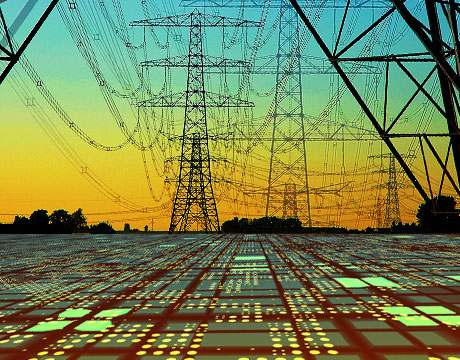
It has come to the attention of the United States Government and businesses that creating opportunities for energy efficiency will help the economy. Not just will there be more supply and demand, energy resources will not rely as much on fossil fuel. The expansion of smart grids will create more opportunities for communities to save money and clean up the environment. More funding needs to be involved in order for this smart grid in order to be in place. When the Obama administration was in place, they signed a deal for the Quadrennial Energy Review (QER) to invest $72 million in U.S. Department of Agriculture loans for smart grid and solar projects in rural areas. If there is more funding, the companies can build these smart grids and solve the problem of energy efficiency. The longer the federal government waits on smart grids, the more money will be spent.
The QER has been testing these smart grids through projects and experiments. They are trying to expand the smart grid that can work with distribution infrastructure. Every house that the smart grid is connected to will be managed and watched over. Each will have smart meters that track energy usage and immediately return that information to utilities of the smart grid. The customer and company will be able to see the supply and demand rates every month. Learning how much a person spends on heat in the month of February will help them prepare for next year. The people using the smart grids will be able to save money by understanding if their is a high or low demand. Preventing power plants to run at a high capacity will save energy and money. When enough funding is established in the smart grid and zero problems are established after experimenting, these grids are going to save a lot of money. Until this grid can be created, people need to continue to manage their costs and use of resources throughout the seasons. With Global warming and loss of natural resources, finding creative ways to save money, energy, and power will help the earth in a positive matter.
Videos:
Below is a video that talks about how the grid that is currently used works. The smart grid that will be established has better features and will be able to help consumers make big adjustments to save money and energy.
https://www.youtube.com/watch?v=N8jqbKd8hVg
Below is a video on how these companies plan on funding these smart grids with renewable energy.
Hydrogen alloy embrittlement is the process that causes steel and other metals to become brittle and eventually break due to the diffusion of hydrogen into the metal. This diffusion often results from the accidental introduction of hydrogen during the forming and finishing operations of the structure, and is increased when the metal is heated. Hydrogen diffusion also increases in cold temperatures when there is a higher concentration of hydrogen outside the metal than inside.
From the outside, "hydrogen induced cracks" look like this:
Hydrogen allow embrittlement, which has been a recognized problem for approximately 140 years, has led to catastrophic failures in major engineering and building projects. Thanks to an international research project involving the work of University of Queensland Center for Microscopy and Microanalysis Director Professor Roger Wepf, which has made next-generation steel a step closer to reality, this problem could be averted in the near future.
A major incident involving hydrogen alloy embrittlement occurred only four shorts years ago, when in 2013 bolts in the eastern span of the San Fransisco-Oakland bridge failed during testing construction. According to Professor Wepf, the hydrogen was diffused very quickly, resulting in the failure of the bridge.
"Our research collaboration has, for the first time, localised and visualised hydrogen in steels and alloys," says Professor Wepf.
With developments from researchers across the globe like Professor Wepf, adversities in engineering such as hydrogen alloy embrittlement can be prevented for future projects. It is this type of research that helps to make large structures such as the San Fransisco-Oakland bridge safe during construction, and saves people time, money, and resources.
Phones may just be the most interacted with piece of technology people use in their daily lives. A constant problem with phones has been a tradeoff between size and portability. A big screen means more room to interact with whatever is there, but it also means more phone will be stuck in your pocket. A group of students at the University of British Columbia hopes to end this needless debate between screen size and portability. They have developed a new touch sensor that can be folded. Touchscreens have been through many changes since they were invented. The first "touchscreens" were regular displays surrounded by light emitters of some kind and sensors across from them. These lights would make a grid above the screen. When the screen was touched, a computer would figure out the coordinates of where the touch came, and what the corresponding point below the touch was supposed to represent. These systems were large, and not very practical for portability, but did make cool home automation systems.
Another widely used technology in the earlier days of portable touchscreens was resistive touch. This is when two pieces of film are places around a grid of materials with a current flowing through them. When the user presses down on the top layer of film the current flows through and registers an input. This type of screen is hard to use, not very precise, and generally low quality. However, it helped touchscreens to become portable.
Now we're onto current touchscreens and what the students at UBC have improved upon. Capacitive screens use your body as a conductor to complete a flow of electricity. This electric input tells the phone where you're touching. This is why most phone touchscreens can't be used with anything but a human input. The UBC students used a layered piece of plastic, made with silicone and a conductive gel, that can be folded. The material can also be stretched. What does this mean going forward? The students at UBC hope to implement it in ways more fulfilling than phones. It can be used across rooms, or even on medical devices that people can interact with on their own bodies. The best part of this new technology is its low cost. The last step to design what the students want, and even the whole bendable phone thing, is to create displays and other components that are compatible with the extreme shape shifting ability of UBC's new sensor.